
BNP 파리바 오픈 결승에서 나타난 ‘나이키 지배’ 현상은 스포츠 의상에 대한 새로운 논의를 불러일으키고 있습니다. 선수들이 동일한 형태의 유니폼을 착용하는 상황은 개인의 개성을 제한하고, 스포츠의 다양성을 해칠 수 있다는 우려가 커지고 있습니다. 이러한 변화는 단순한 패션의 문제가 아니라, 스포츠 자체의 본질에 관한 중요한 질문을 제기합니다. 이제 아래에서 하나씩 확인해보겠습니다.
BNP Paribas Open Final, Copy-Paste Uniforms? The Chaos Caused by ‘Nike Domination’
 Tennis Dress Code Tennis Attire
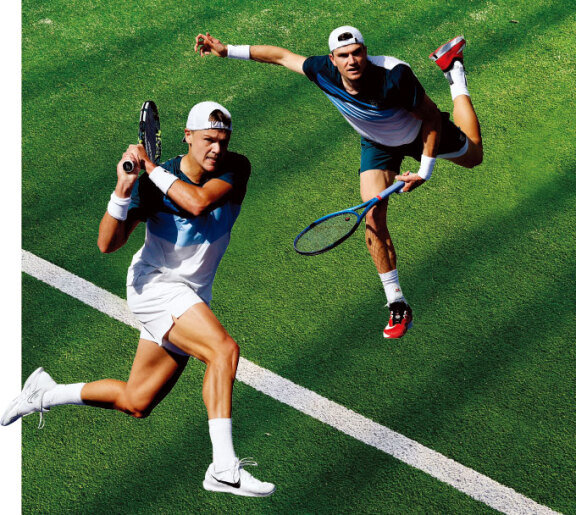
Individuality RevisionWhile it’s rare for actresses to wear the same dress on the red carpet at film festivals, a similar situation unfolded on the tennis court. During the BNP Paribas Open Final held in Indian Wells, USA, last March, the ‘uniform doppelgänger’ incident involving two male players became a hot topic. The main characters in this issue were Holger Rune and Jack Draper. Both players, sponsored by Nike, appeared in the same design of match uniforms.
With similar physical conditions and even wearing their caps backward, it became difficult for the audience, as well as viewers on the broadcast, to distinguish who was who. The only difference was the color of their sneakers: white for Rune and red for Draper. At this point, it’s hard to focus on the match itself while trying to identify the players.
Nike’s Two Faces Encountered in the Final
 Tennis Dress Code Tennis Attire
Individuality Revision
Interestingly, this ‘outfit overlap’ is not the first time it has happened. The two players had previously worn the exact same Nike tennis outfit during the 2025 Australian Open. At that time, fans also reacted by saying, “It looked like they copied and pasted.” Nike sponsors a number of top-ranked tennis players, including Rune, Draper, and Alcaraz, and it is common practice to provide the same limited designs to multiple players each season.
In this BNP Paribas Open, not only in the final but also in the semifinals, Alcaraz appeared in the same shirt design. The only way to distinguish them was by color. In the final, even the colors were the same, which maximized the confusion.
Repeated ‘Uniform Overlap’ in Women’s Matches
 Tennis Dress Code Tennis Attire
Individuality Revision
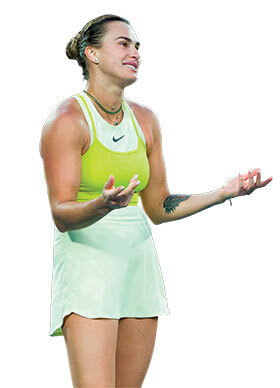
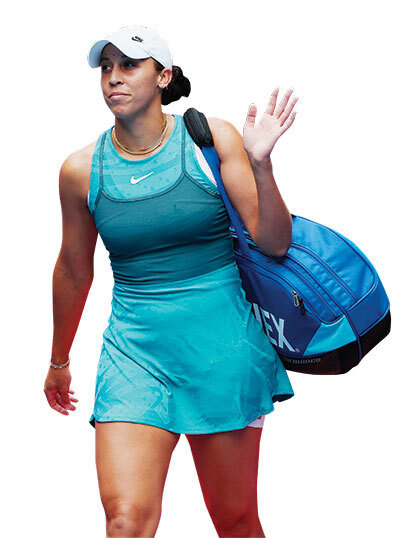
A similar incident occurred in the Australian Open Women’s Final. Aryna Sabalenka and Madison Keys also appeared in the same design of Nike dresses, but they differentiated themselves with yellow and green colors, making identification relatively easy. Still, there was a bit of disappointment in terms of style.
“I Remember the Clothes More Than the Performance”
 Tennis Dress Code Tennis Attire
Individuality Revision
Jack Draper won the final, but many fans were left puzzled by the question of ‘who is who’. On social media and community forums, criticisms poured in, saying, “That uniform is really useless,” and “It was confusing while watching the broadcast.” From the brand’s perspective, there may have been a lot of exposure, but the fatigue outweighed the recognition.
Players Embracing Individuality, Even Designing Their Own
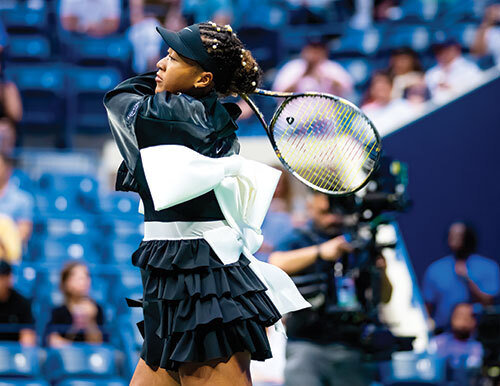
As uniform overlap continues to occur, some players have even started to create their own match outfits. Serena Williams has showcased her unique tennis looks, switching between ballet and suit styles, while Naomi Osaka broke the stereotype of tennis attire by pairing a jacket with ribbons and a tutu skirt during her comeback after giving birth. All of these outfits were created in collaboration with Nike Women and Korean-American designer Yoon Ahn.
Is the Dress Code Okay as It Is?
The problem is that there are no official regulations in tennis regarding adjusting uniform colors. Unlike sports like table tennis, badminton, and squash, which require players to wear different colors from their opponents, tennis only has a ‘dress code’. The ‘all-white’ rule at Wimbledon is a prime example. In light of this incident, there is a growing need for clarification or revision of player dress regulations.
Many Sponsors, but a Lack of Individuality
Nike currently sponsors a number of top male and female players, including Yannick Sinner, Alcaraz, Rune, Draper, Sabalenka, and Osaka. In contrast, emerging brands like ‘ON’ are sponsoring a select few with a more exclusive strategy. While they have succeeded in brand expansion, the limitations of differentiated style strategies have been revealed through this controversy.
Performance is Important, but ‘Viewing Enjoyment’ is Important Too
Tennis is not just a simple sport; it is also a stage for fashion and individuality. If the uniforms make it difficult to distinguish between players during a match, it diminishes the viewers’ immersion. It seems that now, a clothing strategy for the audience and fans, rather than the brand, is necessary.
🔻함께보면 즐거운 콘텐츠 모음🔻
 jude Bellingham’s role in the Trent Alexander-Arnold trade
wirz, De Bruyne, Sane transfers Here we go
kevin De Bruyne says goodbye to Man City after joining Napoli
son Heung-min to Turkey? Will he reunite with best friend Chilhanoglu?
chelsea Women Announces First Official Jewelry Partner
why Arsenal’s mug shot was more bitter: the year the London club won the..
2024-25 Premier League final standings, Champions League and Europa League qualifiers
four Real Madrid players at risk of losing their place under Xavi
when was the last time Man Utd failed to qualify for Europe?
it’s been a bird year for English football
man City 2024-25 season wrap-up: a brutal fall from grace
winning with 3 boxing gloves
jude Bellingham’s role in the Trent Alexander-Arnold trade
wirz, De Bruyne, Sane transfers Here we go
kevin De Bruyne says goodbye to Man City after joining Napoli
son Heung-min to Turkey? Will he reunite with best friend Chilhanoglu?
chelsea Women Announces First Official Jewelry Partner
why Arsenal’s mug shot was more bitter: the year the London club won the..
2024-25 Premier League final standings, Champions League and Europa League qualifiers
four Real Madrid players at risk of losing their place under Xavi
when was the last time Man Utd failed to qualify for Europe?
it’s been a bird year for English football
man City 2024-25 season wrap-up: a brutal fall from grace
winning with 3 boxing gloves