
커피는 전 세계적으로 사랑받는 음료로, 특히 한국에서는 연간 1인당 약 367컵이 소비되고 있습니다. 하지만 커피가 자생할 수 있는 환경은 매우 특정한 기후 조건을 요구합니다. 이러한 조건을 충족하는 지역을 "커피 벨트"라고 하며, 이는 적도 근처의 열대 및 아열대 기후 지역을 포함합니다. 그럼 본문에서 바로 이어서 살펴보죠.
Koreans consume about 367 cups of coffee per person annually, making them the second-largest coffee-consuming nation in the world.
However, specific climatic conditions are required for coffee to be actually cultivated.
Coffee can only be grown in regions known as the “Coffee Belt,” which are tropical and subtropical climates between the Tropic of Cancer and the Tropic of Capricorn.
Now, let’s take a look at the major coffee-producing countries in the world and the future of the coffee industry.
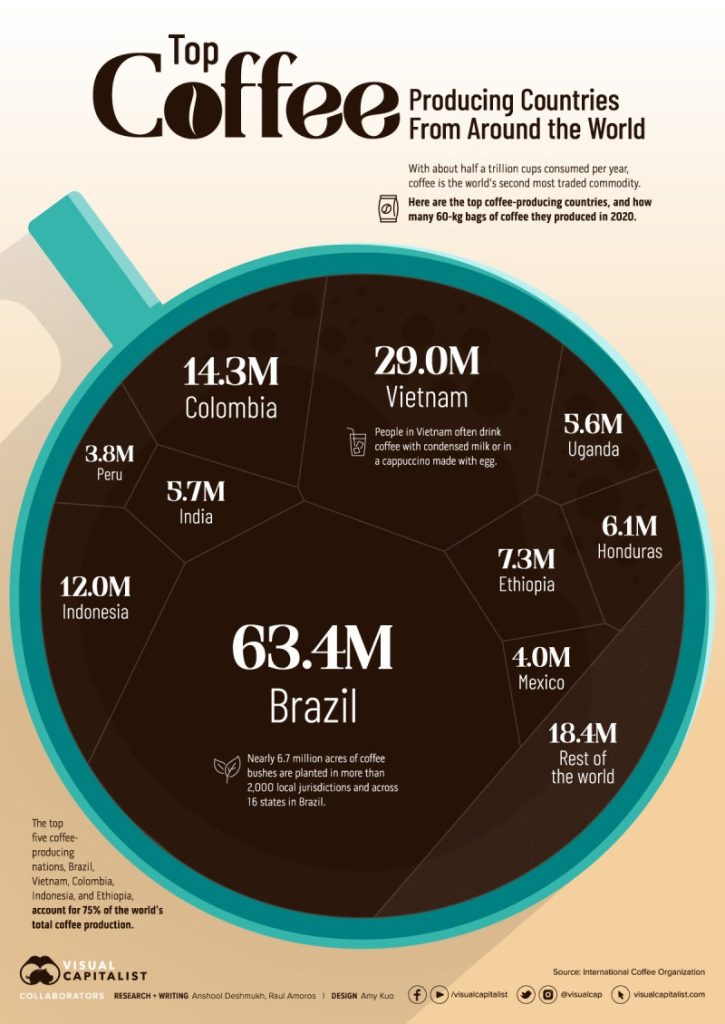
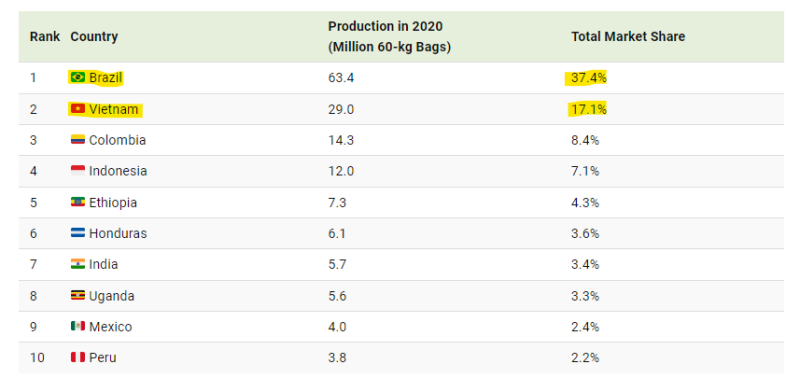
Top 5 Coffee Producing Countries in the World
1. Brazil
Brazil is the absolute powerhouse of global coffee production.
It accounts for about 40% of the world’s coffee supply and has vast coffee farms in the Minas Gerais, São Paulo, and Paraná regions.
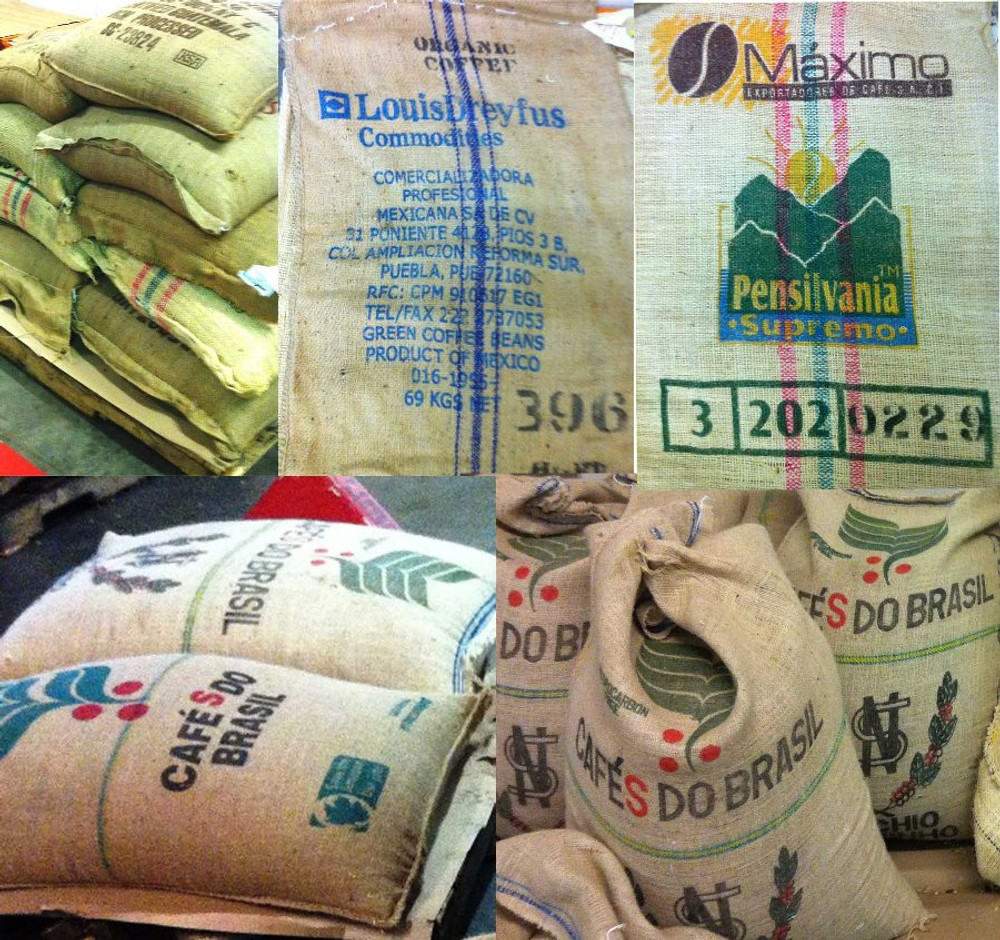
In particular, Brazil maintains a unique production method of drying coffee cherries using the natural process without washing, and the standard unit for coffee trade (60kg bag) also originated in Brazil.
2. Vietnam
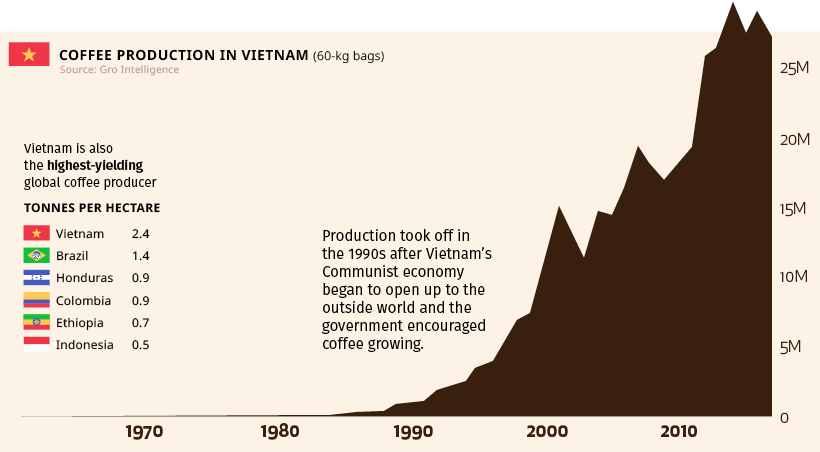
Vietnam accounts for over 40% of the world’s Robusta coffee production.
Vietnamese coffee is known for its high productivity and intense flavor, consistently loved in the global market.
3. Colombia
Colombia is known for producing high-quality Arabica coffee, characterized by its smooth taste and rich aroma.
The marketing strategy featuring the character “Juan Valdez” has also greatly contributed to the global recognition of Colombian coffee.
4. Indonesia
Indonesia is famous for being the origin of the rare coffee ‘Kopi Luwak.’
This coffee, which undergoes a natural fermentation process through civets, is traded at a high price and boasts a unique flavor.
5. Ethiopia
Ethiopia is known as the birthplace of coffee.
It mainly produces Arabica coffee, loved by connoisseurs for its deep body and diverse flavors.
Coffee Belt: A Special Area for Coffee Growth
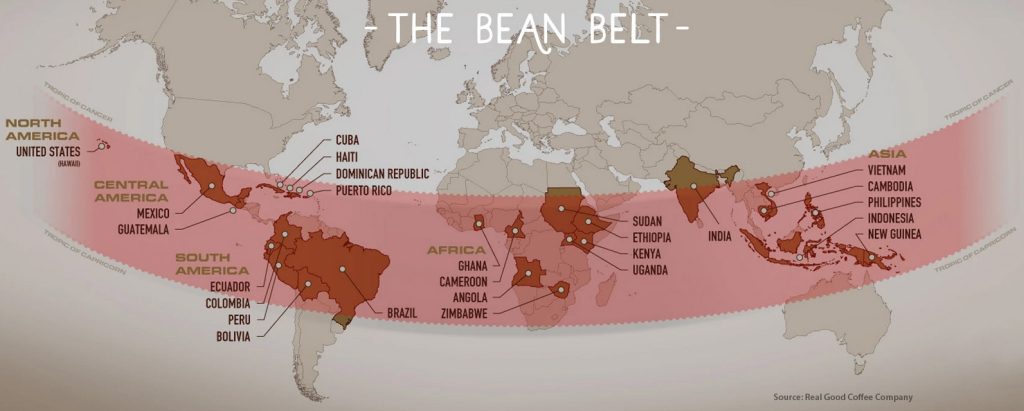
For coffee to grow well, an average temperature of 15-20 degrees Celsius, 60-75% humidity, over 2,200 hours of sunlight per year, and annual rainfall of 1,400-2,500mm are required.
Regions that meet these conditions are known as the “Coffee Belt.”
Currently, Korea is not suitable for coffee cultivation due to harsh winter cold and low rainfall, but if global warming continues, changes may come someday.
The Future of Coffee Production: The Era of Hybrid Coffee
Climate change threatens the survival of traditional coffee-growing regions.
As a result, the development of new coffee varieties (hybrid coffee) that can withstand higher temperatures is actively underway.
Recently, wild coffee varieties that grow naturally in places like the coast of Côte d’Ivoire and Sierra Leone have been discovered, and they are being noted as alternatives for the future coffee industry.
In conclusion
Currently, the center of coffee production is dominated by the top five countries: Brazil, Vietnam, Colombia, Indonesia, and Ethiopia.
In the future, the coffee industry will continue to evolve through blending technology, new variety development, and sustainable cultivation methods.
I hope to enjoy a warm Americano tomorrow morning as well, and I look forward to the future of coffee.
🔻함께보면 즐거운 콘텐츠 모음🔻
 The resonance of Hibiki whiskey blended with art and Brahms’ Symphony No. 1.
Fritz Hansen Repair Pop-up, a sustainable choice celebrating the 70th anniversary of Series 7
Reflecting Again on Korea’s Last Trade Warrior, Kim Hyun-jong
Three internet-only banks see loans to low to mid-credit borrowers surpass 30% for five consecutive quarters… Accelerating innovation in digital inclusive finance.
Naver’s Lee Hae-jin Returns and Global AI Strategy | Overcoming the LINE Crisis and Entering Silicon Valley
Visiting Designer Moon Seung-ji’s First Furniture Brand ‘Habaguden’ Showroom in Hannam-dong
My home is the best GYM! 7 home training items that stimulate your desire to exercise.
Lotto No. 14 First Prize, the Genius Economist Stefan Mandel Who Claimed It Through Mathematics, Not Luck
The Bank of Korea keeps the base rate at 2.5% for the fifth consecutive time… monitoring exchange rate stability and real estate and household debt.
Why is it harder for highly educated men to date? Increased feelings of depression and loneliness.
Seoul city bus strike ends, normal operations resume from the first bus on the 15th — alleviating citizen inconvenience
Summary of Changes to Year-End Tax Settlement Simplification Service This Year | National Tax Service AI Consultation, Expansion of Living Deductions
The resonance of Hibiki whiskey blended with art and Brahms’ Symphony No. 1.
Fritz Hansen Repair Pop-up, a sustainable choice celebrating the 70th anniversary of Series 7
Reflecting Again on Korea’s Last Trade Warrior, Kim Hyun-jong
Three internet-only banks see loans to low to mid-credit borrowers surpass 30% for five consecutive quarters… Accelerating innovation in digital inclusive finance.
Naver’s Lee Hae-jin Returns and Global AI Strategy | Overcoming the LINE Crisis and Entering Silicon Valley
Visiting Designer Moon Seung-ji’s First Furniture Brand ‘Habaguden’ Showroom in Hannam-dong
My home is the best GYM! 7 home training items that stimulate your desire to exercise.
Lotto No. 14 First Prize, the Genius Economist Stefan Mandel Who Claimed It Through Mathematics, Not Luck
The Bank of Korea keeps the base rate at 2.5% for the fifth consecutive time… monitoring exchange rate stability and real estate and household debt.
Why is it harder for highly educated men to date? Increased feelings of depression and loneliness.
Seoul city bus strike ends, normal operations resume from the first bus on the 15th — alleviating citizen inconvenience
Summary of Changes to Year-End Tax Settlement Simplification Service This Year | National Tax Service AI Consultation, Expansion of Living Deductions